Children’s Literature Blog
“Oh, the places you’ll go!” – Dr. Seuss
Anne Frank: diary of a young girl
By Anne Frank
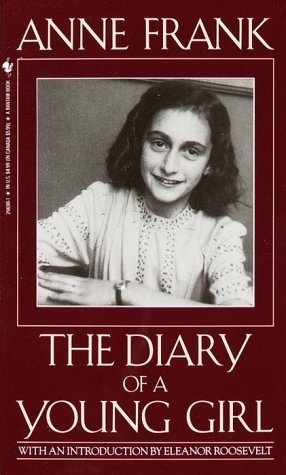
Bibliographic Information: Frank, A. (1993). Anne Frank: diary of a young girl. New York, N.Y: Bantam/Doubleday.
Genre/ Intended Reader: Autobiography; Grades 7-8
Thoughts About Craft: I thought this book was powerful since the audience gets to read the life of a young little girl during the genocide of the Jews in World War II. I understand that her father, Otto Frank, did take some sections out of the diary because it contained personal information, but reading about her living situation and thought process gives the reader a small glimpse of what the Jewish people went through. It was interesting to see Anne Frank transform over a short amount of time from an innocent, childish young girl to a mature, young woman who expresses her deep thoughts and discusses real-world situations. This story does not have a happy ending, but it does allow the world to hear the voice of Anne Frank. Our society has the opportunity to read the life of a young Jewish girl during World War II who lived in fear and lost her childhood in an instant.
Thoughts About Particular Issues Raised in the Book: An issue I noticed in the story of Anne Frank is how she keeps her true self hidden and doesn’t express her real thoughts and emotions to anyone, not to her friends or family. I think this is an important issue to discuss with young individuals who are going through puberty because parents, siblings, and friends need to establish a bond with one another. She puts on a fake mask around her family to try to fit in and reduce tension. This shows how important it is to create a comfortable relationship with young individuals, so they aren’t;t forced to grow up too fast.
Critique: By translating this book through Anne Frank’s own words creates a powerful diary that expresses the cruel and unjust real world. Many individuals will only remember the Holocaust and World War II through documentaries and history books, but reading an autobiography allows the reader to understand what it was like to be a Jew during this time. Writing through her point of view creates a narrative style of writing in which the audience can have a deeper understanding of what it was like to live in fear and isolation. Anne Frank illustrates the tragic story of her experience during this genocide but is determined for others to hear her voice and true self.
Lesson Sketch: After reading the story “Diary of a Young Girl”, students will create a character map using posters, markers, or crayons and write at least 5 ways the setting shaped the characteristics of Anne Frank.
Discussion Questions: What role does the diary play in Anne’s life? Why has Anne Frank’s diary had such a huge impact on the world? How does Anne Frank’s perception of herself begin to change as she moves through puberty in “The Diary of a Young Girl”?
CCSS.ELA-Literacy.RL.7.3: Analyze how particular elements of a story or drama interact (e.g., how setting shapes the characters or plot).
3 Resources: https://www.rif.org/literacy-central/book/diary-young-girl https://www.teacherspayteachers.com/Browse/Search:diary%20of%20a%20young%20girl https://www.teachervision.com/anne-frank-diary-young-girl-discussion-guide
Radiant Child
By Javaka Steptoe
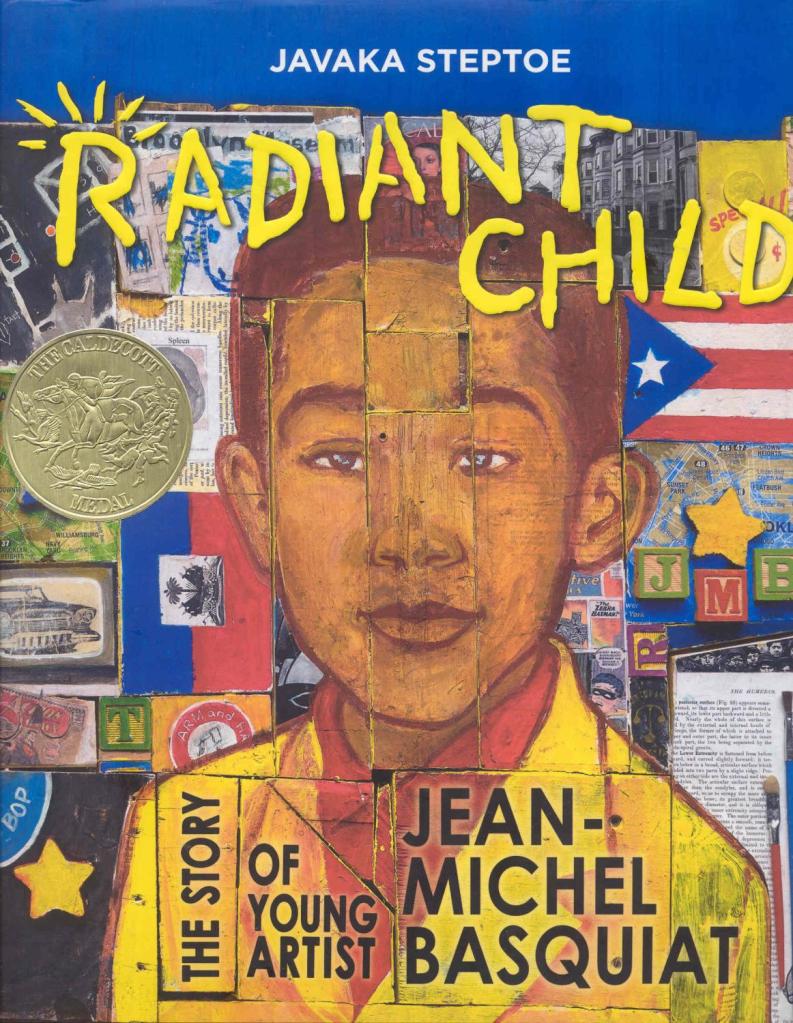
Bibliographic Information: Steptoe, J. (2016). Radiant child: The story of young artist Jean-Michel Basquiat (First edition.). New York: Little, Brown and Company.
Genre/ Intended Reader: Biography; Grades 1-4
Predictions: before reading this story, I knew it was going to be about an artist’s childhood since the title says “The story of a young artist”, which indicated the background history of an upcoming artist. I thought this story was going to discuss his art and how it impacted the lives of many individuals. The story did describe his style of art, but it mainly explained what art was to him, along with the challenges and struggles he faced while becoming an artist. I predicted that he would become an artist one day by getting his drawings noticed in the streets of the city he lived in. I anticipated he would create images and paintings that would catch the eyes and hearts of many individuals, which will cause him to become a famous artist. I knew there were going to be some struggles and challenges he faced when growing up; however, I didn’t know what they were.
Thoughts About Craft: The book is full of vibrant colors that illustrate the challenges and life traumas the character experiences throughout his childhood and adolescent years. Many individuals can connect with the character and the story of his life through similar experiences with accidents and family issues. It discusses the character’s views on what art means to him and describes the development of his style throughout his story. Art doesn’t have to be perfect since Basquiat describes his art as “not neat or clean, nor does he color inside the lines. They are sloppy, ugly, and sometimes weird, but somehow still beautiful.” The author portrays a story filled with dreams, unfortunate events, and determination through the eyes of a young aspiring artist.
Critique: The story of a young artist is portrayed in an appropriate manner where any grade level could read and understand the message behind the author. It discusses difficult traumatic experiences young individuals may experience, but overcome as they grow up. The style of the book is filled with colorful drawings and images that represent Basquiat’s style of art. The diverse book is a way to celebrate his artwork and understand that art doesn’t have to be perfect to express your thoughts and emotions.
Lesson Sketch: After reading “Radiant Child”, students will be able to write 3 details about the characteristics of Jean-Michel’s artwork.
Discussion Questions: What was art to Jean-Michel? Is it possible for art to be both beautiful and ugly? What makes some pictures art and others not?
CCSS.ELA-Literacy.RL.1.3: Describe characters, settings, and major events in a story, using key details.
3 Resources: https://www.teachingchildrenphilosophy.org/BookModule/RadiantChildTheStoryOfYoungArtistJean-MichelBasquiat https://ed.ted.com/lessons/the-chaotic-brilliance-of-artist-jean-michel-basquiat-jordana-moore-saggese#review http://www.theclassroombookshelf.com/2017/02/radiant-child-the-story-of-young-artist-jean-michal-basquiat-2017-caldecott-medal-winner/
Wonder
By R.J. Palacio
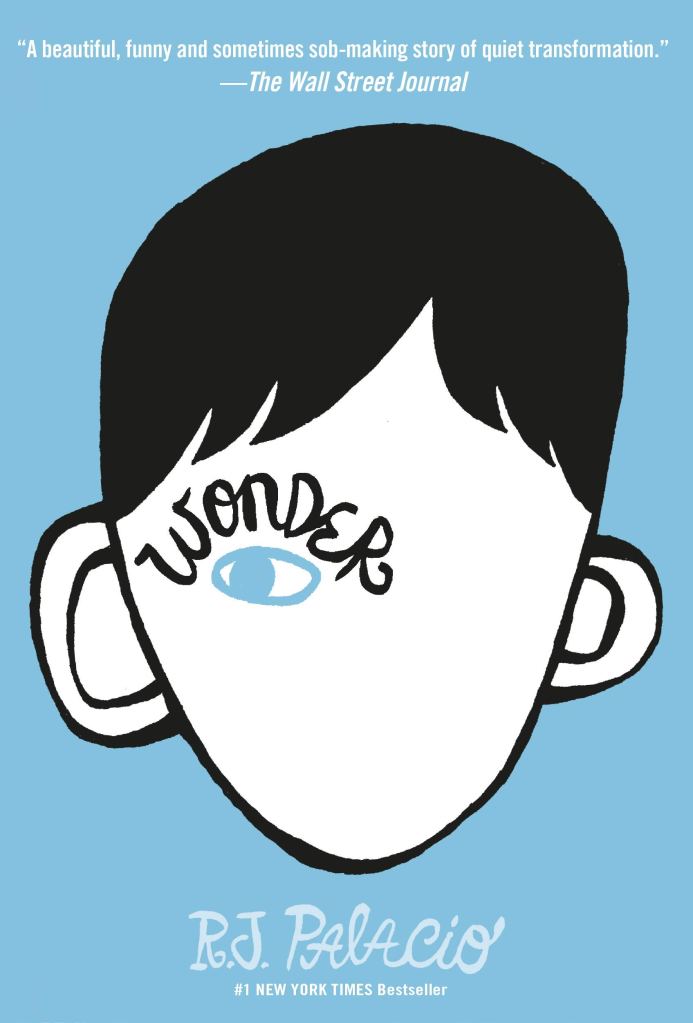
Bibliographic Information: Palacio, R. (2012). Wonder. New York: Alfred A, Knopf.
Genre / Intended Reader: Fiction; Grades 3-6
Thoughts About Craft: I thought this book was a story filled with wonder and inspiration. It discusses the challenges and personal struggles of a young boy’s journey of going to a private school after being home schooled his entire life. Auggie has lived a difficult life due to his facial deformity since individuals are uncomfortable or scared by his looks. The story brings up difficult concepts such as bullying, birth defects, and self-hate because Auggie wonders why he is born the way he is. The author writes the story through multiple perspectives of individuals who are important in Auggies life, which gives us a deeper understanding of their thoughts and dilemmas. “Wonder” is a powerful story that will inspire young students to overcome any obstacle they may face in their life.
Thoughts About Particular Issues Raised in the Book: I thought it was important how the book explains the cause and effect of bullying. It is still common that bullying continues to occur in today’s society; however, the author uses this issue to demonstrate the importance of kindness and friendship. Without the kindness of Auggies’ friends, he would most likely be home schooled and sheltered from the real world for the rest of his life. By facing his fears and going to a private school, Auggie develops authentic friendships who accept him the way he is. His friends show him that he doesn’t need to change who he is, but rather those around him need to change how they see him. The importance of friendship and kindness is displayed throughout the story, which will challenge readers to do the same in their lives.
Critique: The author does an excellent job writing the story through multiple perspectives of important characters around Auggie. This is a difficult style of writing to portray; however, Palacio successfully develops the story of Auggie through different views. By choosing this type of style, the story gives readers a deeper meaning of the thoughts and inner conflicts each individual experienced. This story will not only capture the hearts of the readers, but it will also leave the urge to express kindness to those in their lives.
Lesson Sketch: After finishing the story “Wonder”, students will be able to create a poster that displays 10 ways they can express or show kindness to others.
Discussion Questions: Did you like the way R.J. Palacio told the story from alternating viewpoints? Why or why not? What does Jack learn through his friendship and betrayal of Auggie? How does Auggie change over the course of the book? Why? Do other characters change? Who changes the most?
CCSS.ELA-Literacy.RL.4.3: Describe in depth a character, setting, or event in a story or drama, drawing on specific details in the text (e.g., a character’s thoughts, words, or actions).
3 Resources: https://wonderthebook.com/for-teachers https://www.rif.org/literacy-central/book/wonder https://www.penguin.com.au/content/resources/Wonder%20Teachers%20Resources.pdf
Soldier Bear
By Bibi Dumon Tak
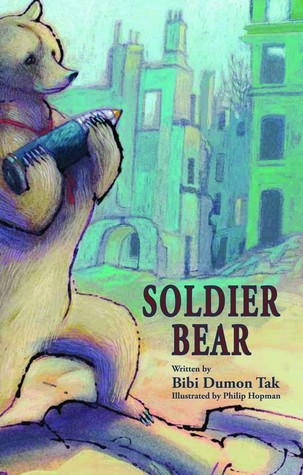
Bibliographic Information: Tak, B. D. (2008). Soldier Bear. Amsterdam: Eerdmans Books for Young Readers.
Genre / Intended Reader: Historical Fiction; Grades 4-7
Predictions: Before reading this book, I predicted that it was going to be based during war due to the title and illustrations on the front cover. I thought the story was going to be a fictional journey told through the eyes of a fictional bear. The bear would act like a human and tell his journey through the grim realities of war during this time. I began to think that this story was going to be similar to a fictional story where animals portray humans and express human characteristics. I was curious to figure out the purpose of this story and how a bear ties into the chaos of war.
Thoughts About Craft: I was surprised that the book was “based on a series of actual events…” I thought that a bear can’t travel with soldiers during World War II and be considered part of the group; however, this bear was one of a kind. Voytek is no ordinary bear who becomes adopted by Polish soldiers stationed in Iran during World War II. He is an honorable, heroic, and mischievous bear who is considered one of the soldiers himself and traveled to Egypt, Italy, and Scotland with his group. He was a bear who learned to carry bombs, cornered enemy spies, and entertained the soldiers through his antics. Through the soldiers’ eyes he was more than a bear. He was a comrade in arms that provided comfort and encouragement among the harsh realities of war.
Critique: “Soldier Bear” is based on a true story of an orphaned Syrian brown bear cub that offers readers a glimpse into an unknown piece of history. Tak expresses the relationship between the soldiers and their animal friends in a humorous way, even during a time of war. Though this story may not be suitable for younger readers, since it references the soldiers giving Voytek cigarettes and alcohol, it is a charming story that expresses love and friendship in the middle of World War II. The book is enriched with pencil drawings by the illustrator, Philip Hopman, which captures the humor of the story being told. “Soldier Bear” is a remarkable story of an unlikely hero and friend who made World War II easier to bear.
Lesson Sketch: After reading “Soldier Bear” students will be able to write 3 examples/ details from the text that prove the Polish soldiers considered Voytek a comrade during World War II.
Discussion Questions: Do you think animals can have personalities like people? What are some things Voytek does that make him a valuable member of the unit? Do you think it is possible to be happy during times of war?
CCSS.ELA-Literacy.RL.4.1: Refer to details and examples in a text when explaining what the text says explicitly and when drawing inferences from the text.
3 Resources: http://www.todayifoundout.com/index.php/2013/09/bear-member-polish-army-wwii/ https://www.mnn.com/earth-matters/animals/photos/10-ways-animals-have-served-the-military/soldier-bear https://youtu.be/twr38iHXYVw
The Giver
By Lois Lowry
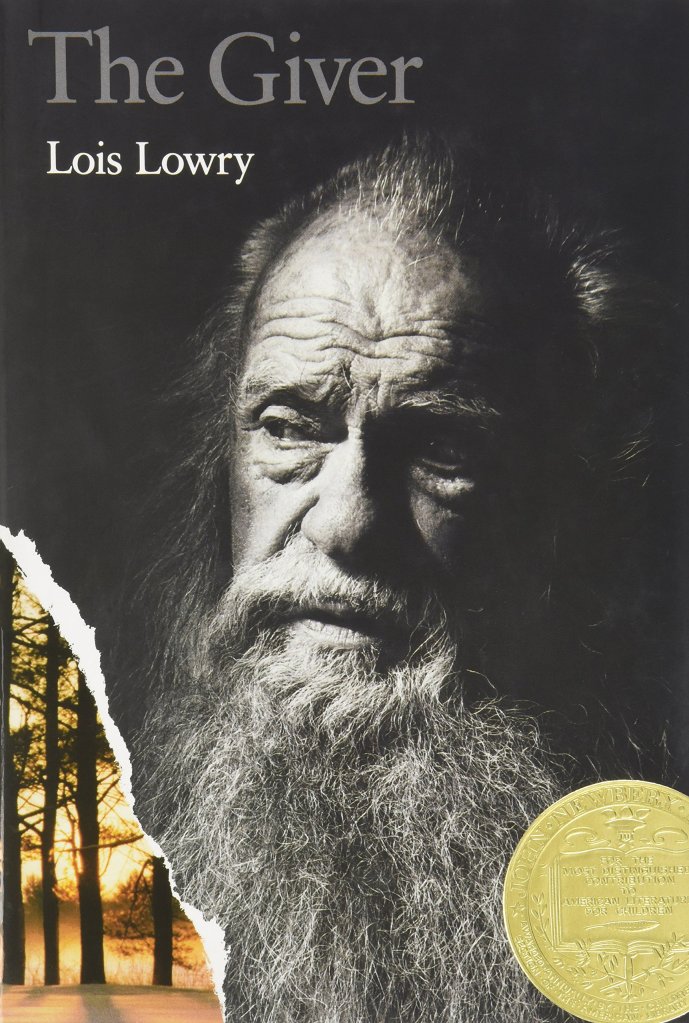
Bibliographic Information: Lowry, L. (1993). The giver. Boston , MA: Houghton Mifflin Harcourt.
Genre / Intended Reader: Science fiction; Grades 6-12
Predictions: Before reading the novel, I wanted to analyze the colors and font style on the cover to determine if it gives the reader a hint about the story. This book is a science fiction and dystopian literature, which gives us the idea that the setting is going to take place in a utopian society. The title “The Giver” is written in a red font that contrasts the black and white background. The background colors may represent the society that is described in the book, explaining that the community lives in a black and white world. There are no emotions, freedom, or individuality within this community; however, the color red is an intense color for the title. I believe the author meant to have the font colors red to express that the main character is different from the rest of society. The color red can represent many emotions like fire, passion, anger, and love. I believe the protagonist in the story will disrupt the utopian society, discover the truth, and expose the Elders for controlling the lives of every citizen.
Thoughts About Craft: I thought this craft was unique and alluring because it discusses ideas, themes, and issues that can challenge the readers’ thoughts about human society. The society Jonas lives in is a community where there is no suffering, hunger, or war and every citizen is assigned a job. The Elders of this community enforce Sameness because it protects people from the consequences of making the wrong decisions. At first, this sounds nice; however, there is no freedom, choice, love, or individuality as well. This causes the audience to consider if there can ever be a perfect society. It challenges the idea of living versus being alive. The story contains intense themes such as the importance of memories, individuality, and the relationship between pain and pleasure. The story brings insight into understanding that a perfect society cannot be created without sacrifice; however, if we sacrifice who we are then are we truly living?
Critique: I believe this book is suited for young adults because it raises complex issues and mild sexual content. The author draws the reader into the idea that the society Jonas lives in doesn’t seem bad at first because everyone is safe, nice, and normal, but then illustrates how there is no freedom, choice, love, or individuality among this community. The writing style is a straightforward narrative that is easy to read. It does not contain complex words, rather than complex thoughts. It is written in the third person and solely focuses on Jonas. This allows the audience to understand what he is thinking and feeling as he progresses through the story since he is the protagonist. This story is filled with situations that challenge the reader to express their thoughts and emotions about a utopian society.
Lesson Sketch: After reading “The Giver”, students will be able to create an alternative ending to the story on a 1-2 page paper.
Discussion Questions: Why is the relationship between Jonas and The Giver dangerous, and what does this danger suggest about the nature of love? Do you think that the government should limit the size of families in the community? Do you think that twelve-year-olds should be treated as adults?
CCSS.ELA-Literacy.W.9-10.9: Draw evidence from literary or informational texts to support analysis, reflection, and research.
3 Resources: https://www.scholastic.com/teachers/lesson-plans/teaching-content/giver-lesson-plan/ https://www.rif.org/literacy-central/book/giver http://thegiverlessonplans.com/
The Hate U Give
By Angie Thomas

Bibliographic Information: Thomas, A. (2017). The Hate U Give. HarperCollins.
Genre / Intended Reader: Young Adult Fiction; Grades 9-12
Thoughts About Craft: Angie Thomas creates a powerful story that is centered around a difficult issue based on police brutality and violence against the black community. Through the main character, Starr, the audience witnesses the unjust and cruel story of minority life. The author uses this fictional story to discuss intense topics of racism, justice, and identity. This novel is an engaging narrative that describes an intelligent and brave protagonist who brings hope rather than despair to her community. Her name is Starr because she acts as a light of hope and truth for many of the characters in the story.
Critique: The setting takes place in Garden Heights, an inner-city neighborhood in the southern part of the United States. This fictional city may represent the Georgetown neighborhood in Jackson, Mississippi, and the suburbs associated with this place. The story is told through the first-person point of view by a young 16-year-old girl named Starr Carter. Her narrative offers insight into her feelings and thoughts through each event of the novel. While her opinions may seem biased, she does not distort the truth and does her best to explain her feelings. The tone of the story is done colloquially as if Starr is talking to a friend. This makes it seem as if the reader is experiencing all these events alongside Starr. The author expresses heavy themes throughout the novel that society is uncomfortable to talk about, but creates a powerful story that can be the start to a difficult conversation our society needs to have.
Lesson Sketch: After reading the story “The Hate U Give”, students will be able to create a collage of selected images that depicts and explains important themes within the novel.
Discussion Questions: Starr suggests that Williamson Prep holds a roundtable discussion about Khalil’s death, but Dr. Davis, the principal, doesn’t feel it’s necessary. Why do you think Dr. Davis feels this way? What would you do if you were the principal at Williamson? After Khalil dies, parts of his life are shared in conversations, news media, and social media. How do the messages differ from each medium? Was one more reliable? Who got his story wrong? What might have been a more reliable source for information on Khalil? In chapter 9, Starr’s mom is telling her a story and says, “Sometimes you can do everything right and things will still go wrong. The key is to never stop doing right”. Do you agree or disagree with this statement? Why or why not?
CCSS.ELA-Literacy.SL.11-12.1: Initiate and participate effectively in a range of collaborative discussions (one-on-one, in groups, and teacher-led) with diverse partners on grades 11-12 topics, texts, and issues, building on others’ ideas and expressing their own clearly and persuasively.
3 Resources: http://www.readwritethink.org/classroom-resources/lesson-plans/developing-critical-consciousness-through-31231.html https://commons.hostos.cuny.edu/hostosreads/the-hate-u-give-resources/ http://libguides.bristolcc.edu/c.php?g=949130&p=6864280
A Game for Swallows
By Zeina Abirached
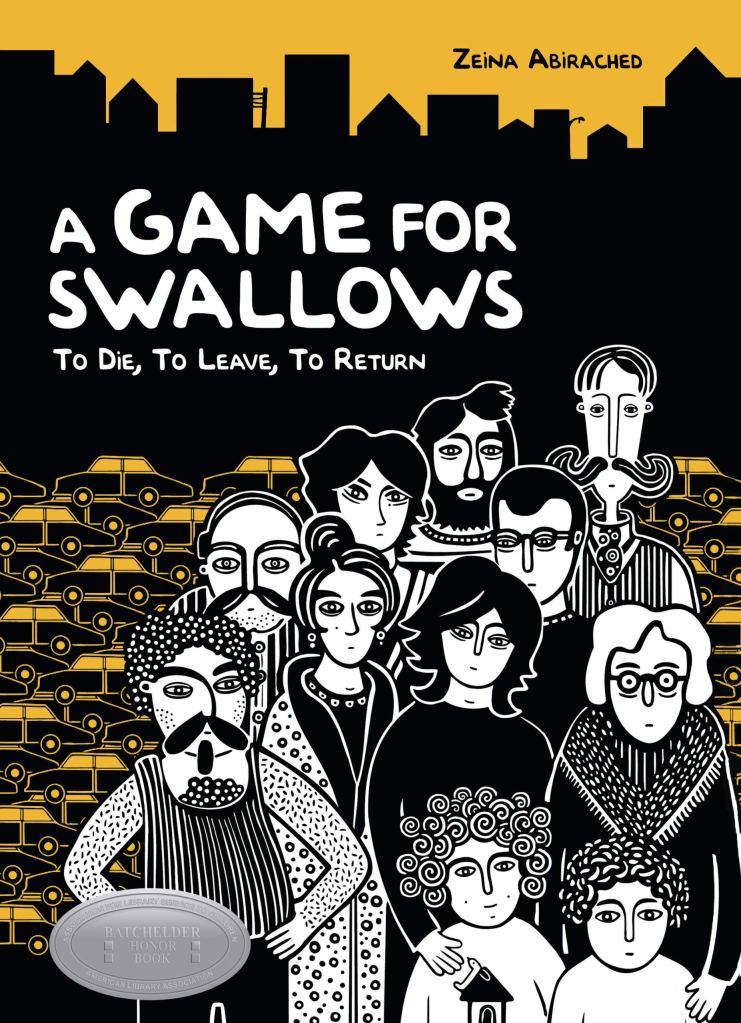
Bibliographic Information: Abirached, Z. (2012). A Game for Swallows . Graphic Universe TM.
Genre / Intended Reader: Graphic Novel; Grades 6-12
Thoughts About Craft: “A Game for Swallows” is a historical fiction graphic novel that illustrates the story of Zeina Abirached during the Lebanese Civil War. She offers readers a glimpse of her childhood memories during a time of war in the 1980”s. While waiting for the return of her parents, the author describes how her city of Beirut is split into two parts, the West side being Muslim and the East side being Christian. With the constant threat of artillery, shootings, snipers, and assassinations, Abirached, her brother, and neighbors try to live the best they can by making cakes, acting out scenes from Cyrano de Bergerac, drinking strong Turkish coffee, sharing food, and telling stories. This memoir is a striking story that not only focuses on Abirached and her brother, but their neighbors who live in the same building. The characters each have their own background, memories, and stories that are explained and explored through the pages. Readers will find it difficult to put this novel down due to the experiences and artwork the author displays. It is a graphic novel that gives the audience a taste of what it was like growing up during this civil war.
Critique: The setting of the story takes place in the 1980’s in Beirut, Lebanon during the Lebanese Civil War. It describes non stop violence between the West and East side of the city with snipers, bombings, and shootings. Some children in the Middle East may be able to relate to the events that occur in this graphic novel due to the modern day violence in that region. Children are constantly growing up in a time of war while experiencing the loss of friends and loved ones. The artwork is unique with a black and white, geometric, highly stylized illustrations. Abirached creates a specific pace throughout the novel which makes the audience feel types of emotions like anxiety with tense moments. Her story allows young students to learn about the conflicts in the Middle East and understand the reality for children who grow up in a warzone. It is an eye opening novel that encourages readers to appreciate their freedom, safety, home, and community.
Lesson Sketch: After reading “A Game for Swallows”, students will be able to create a blog about one theme that occurs in the novel and include evidence from the text in 1-2 paragraphs.
Discussion Questions: What would you do if you were in Zeina’s position? How is this novel relatable in today’s society? Do you think that we may take things for granted in our daily lives?
CCSS.ELA-Literacy.RL.7.2: Determine a theme or central idea of a text and analyze its development over the course of the text; provide an objective summary of the text.
3 Resources: http://www.tcj.com/i-was-convinced-that-beirut-stopped-at-that-wall-an-interview-with-zeina-abirached/ https://www.city-journal.org/html/can-beirut-be-paris-again-13586.html https://arabcomixproject.weebly.com/zeina-abirached-a-game-for-swallows-and-i-remember-beirut.html
Lincoln: A Photobiography
By Russel Freedman
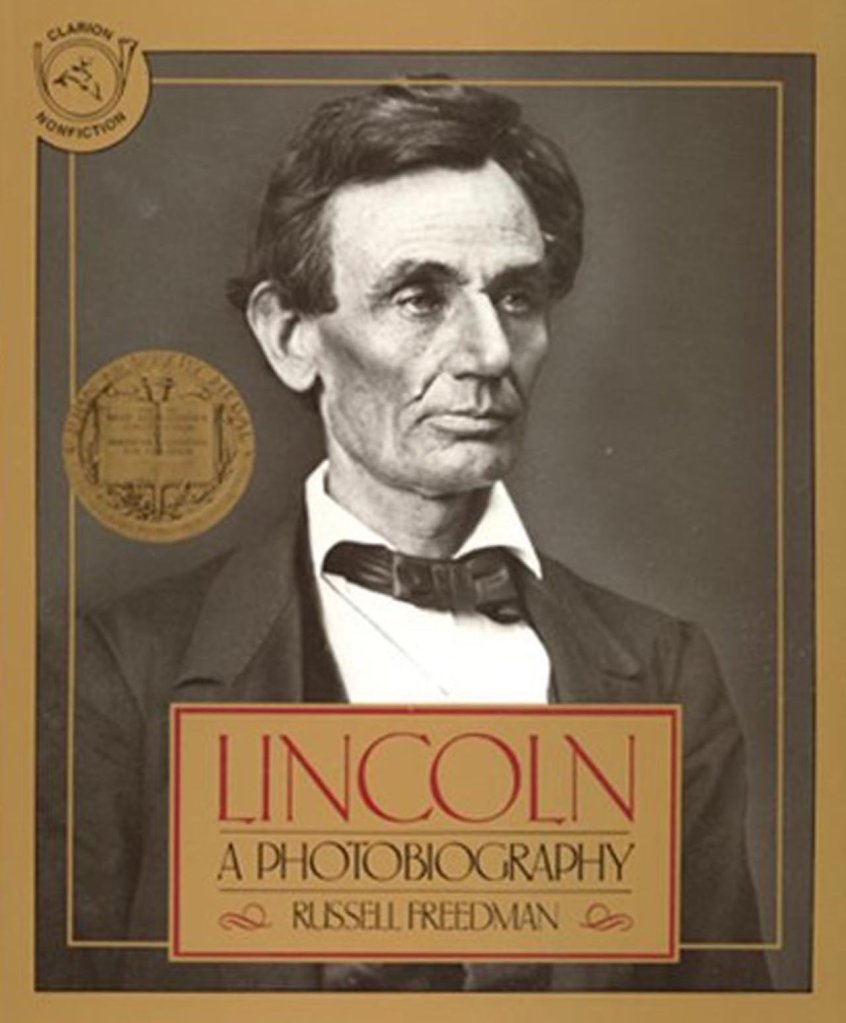
Bibliographic Information: Freedman, R. (1987). Lincoln: A Photobiography. New York, NY: Houghton Mifflin Harcourt.
Genre / Intended Reader: Biography; Grade 3-8
Thoughts About Craft: This biography describes the life of the sixteenth American president, Abraham Lincoln, through words and illustrations. This book is easy to read; however, it is a great informational biography that flows from one chapter to the other. It begins with the author explaining how even though Lincoln was a famous individual during his time, he didn’t reveal a lot about himself. Through the author’s eyes, he was a private man, so it may be impossible to ever fully know Abraham Lincoln. The story goes on to elaborate about Lincoln’s life, from early childhood to when he passed away in 1865. It contains illustrations like drawings, letters, and visual aids that navigate Lincoln’s life and career, which helps the reader follow the story. Each chapter flows to the next while charting through the life of the sixteenth president. It contains details, speeches, and quotes that show students who Lincoln was and how he impacted the future of America, such as ending slavery. By including pictures from the past, quotes directly from Lincoln, and additional resources to learn more about this historic figure, students will be immersed within the past. Freedman depicts a wonderful book that brings the past to life and deserves the Newbery award in 1988. This is a book filled with rich content and information that will benefit students learning or doing research about the sixteenth president of the United States.
Critique: This informational biography discusses a well known historical figure that heavily impacted the future of America. The first chapter is unique compared to other biographies because the author discusses what kind of man Abraham Lincoln was. Through his research, the author states his own opinion to describe Lincoln as a private man even though he was one of the most photographed men of his time. He causes the reader to have the idea that Lincoln was a mysterious man that we’ll never know who he truly was. Freedman creates an enthralling narrative that explains the life of Abraham Lincoln in a time of injustice. The plot followed him from where he was born to when he died and kept the reader up to date on where he traveled to. The writing style was simple and flowed from one chapter to the next. The images allowed the audience to follow the story visually and inspired readers through his speeches and quotes. There are many themes within this biography that can be used inside and outside the classroom. It brings in difficult discussion and conversations, such as slavery. It is a great informational text that depicts Lincoln’s life, struggles, and successes. Freedman writes a powerful biography that captures one of the greatest presidents of the United States.
Lesson Sketch: After reading “Lincoln: A Photobiography”, students will be able to create a poster that describes President Abraham Lincoln with 7-10 facts from the book.
Discussion Questions: What tragic events occurred while president Lincoln was in office? How did Lincoln feel about slavery, and how did his opinions of slavery change during his years in office? How has Abraham Lincoln impacted the history of America?
CCSS.ELA-Literacy.RL.4.3: Describe in depth a character, setting, or event in a story or drama, drawing on specific details in the text (e.g., a character’s thoughts, words, or actions).
3 Resources: https://www.rif.org/literacy-central/book/lincoln-photobiography http://www.socialstudiesforkids.com/subjects/abrahamlincoln.htm https://www.ducksters.com/biography/uspresidents/abrahamlincoln.php
 Children's Literature - Jessica Padilla